
LOHAS with art: older adults show their creativity with music and colors
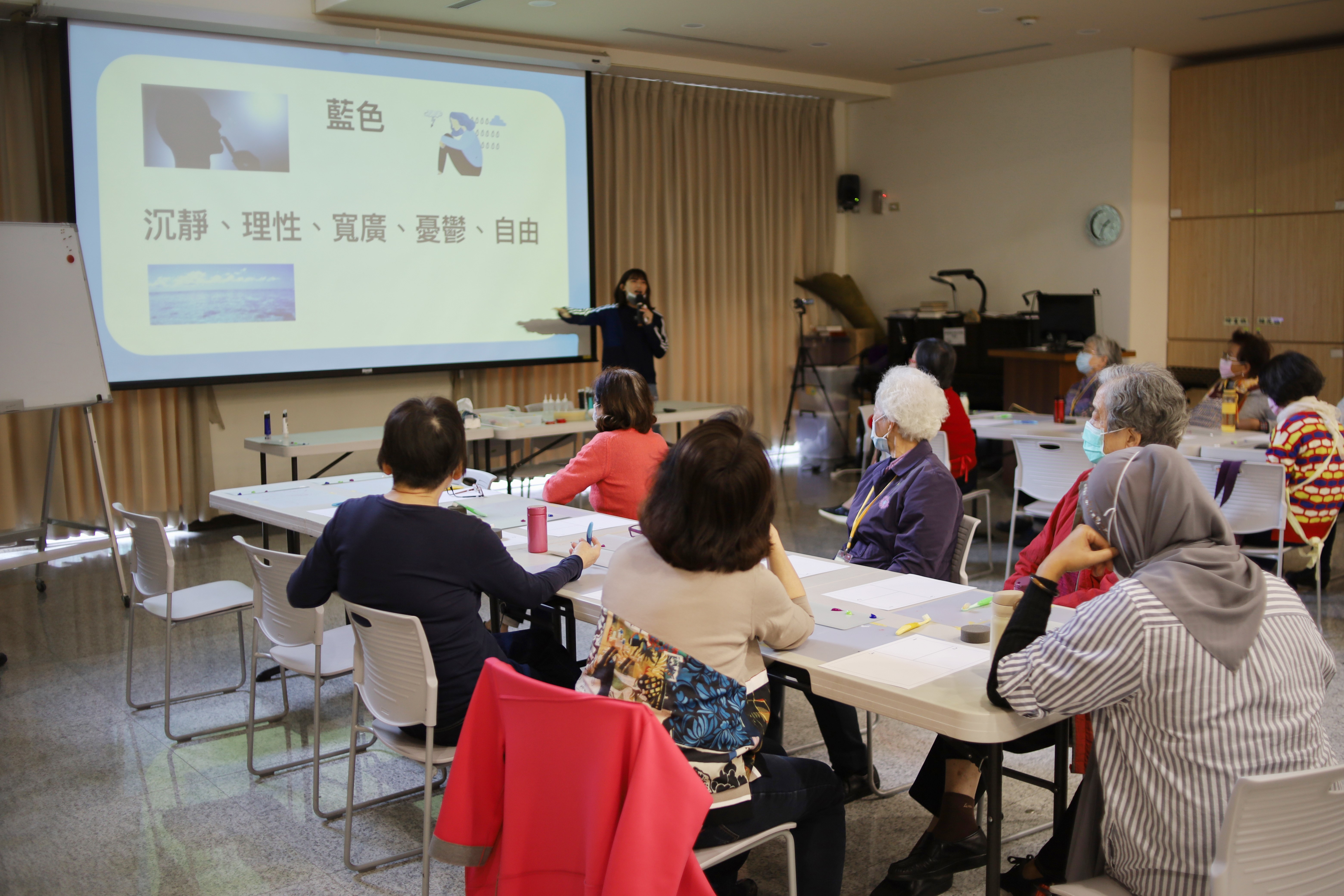 |
| The older adults discussed how music makes them feel in class. |
Strings of melody flow out of Heping 183 Care Center, a classroom located in Taipei City. Older adults in the classroom are enthusiastically discussing how they feel about different pieces of music, such as answering the question “Does a scene form in your head when you listen to certain sounds?” People tend to associate high-pitched sounds with bright colors and slow rhythm with a dimmed, toned-down scene. If music had color, what colors would it be?
Drawing to music for synesthesia
A team named “Savor of Senior” combined the creativity of teachers and students from National Taiwan University of Science and Technology to design a four-session synesthesia course using colors and music. Older adults in the community were asked to transform the music they hear into drawings. By using colors to create music, the older adults savor life in a unique way.
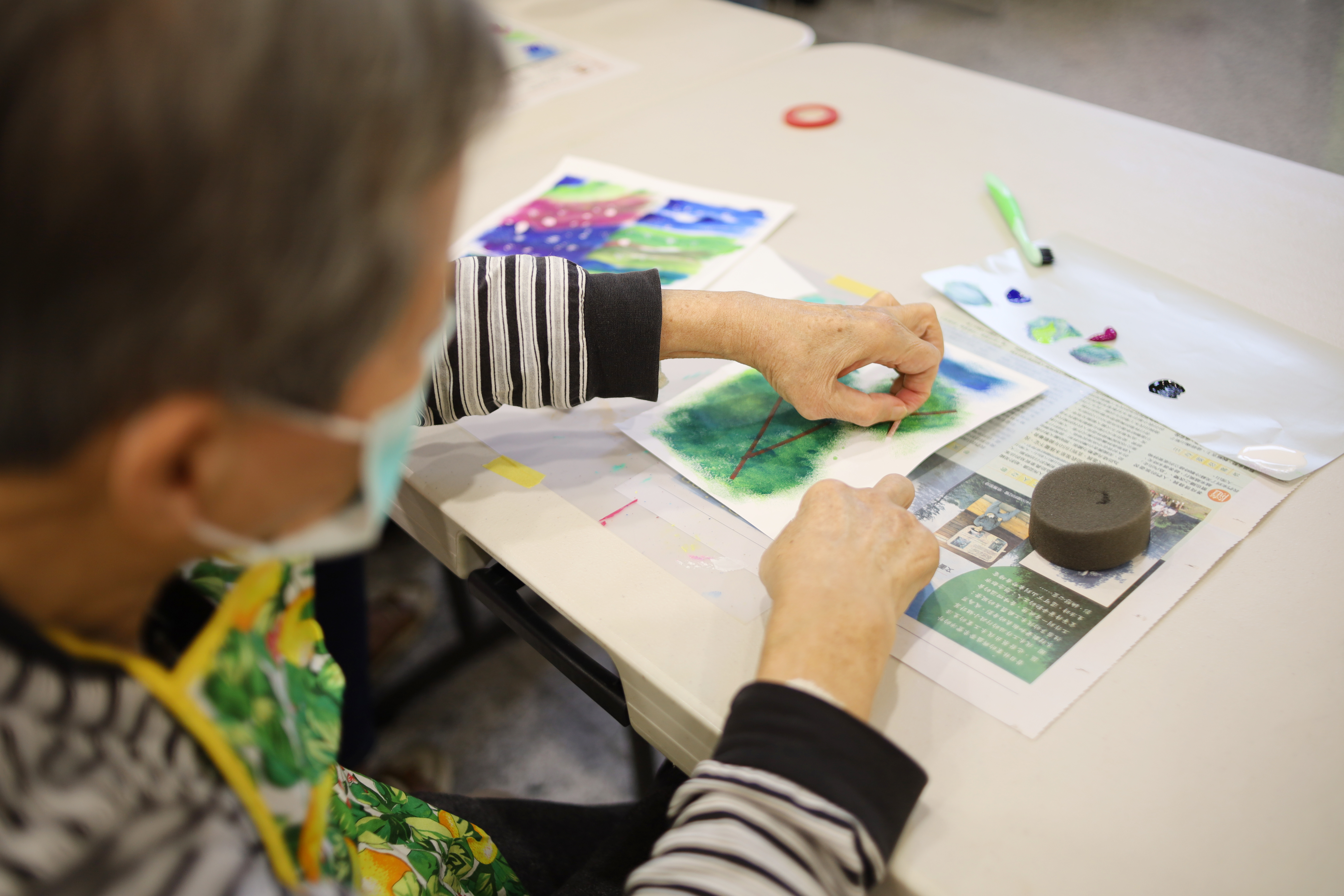 |
| LOHAS learners exercise their creativity with colors. |
Grandma Huang, a student at Shuang Lien Active Aging Center in New Taipei City shared her thoughts: “I used to think that drawing requires paintbrushes, so I wasn’t interested in art at first.” The expertly-taught class changed her impression of drawing, and she has anticipated every class since then.
During the initial phase of trial teaching, we found that older adults with no background in painting had difficulty illustrating the profiles of objects. Faced with these obstacles, the team adjusted the teaching materials of the course in response to the physical and mental states of older adults, and props were created to facilitate the creative process. For example, students tapped with a sponge instead of painting with a brush to color, created branch textures using the bristles of a toothbrush, and the teachers designed shape templates for older adults with zero experience in drawing to make the task easier for them.
The first session of the course involved painting the colors of music. Older adults were led to wander in a world of music and colors. “When I was painting, the music gave me a groovy vibe so I just swung with the music and drew what I felt from the melody,” said Grandma Kao as she shared her drawing. It turns out that when people draw to music, they can’t help but swing their paintbrush with the rhythm, and their artwork is full of musical flow. After the course, Grandma Kao said “Now I respect my grandson’s decision to study with the radio on.” She said that the course taught her about young people and to respect their thoughts.
Simulate phonograph records, play the melody of colors
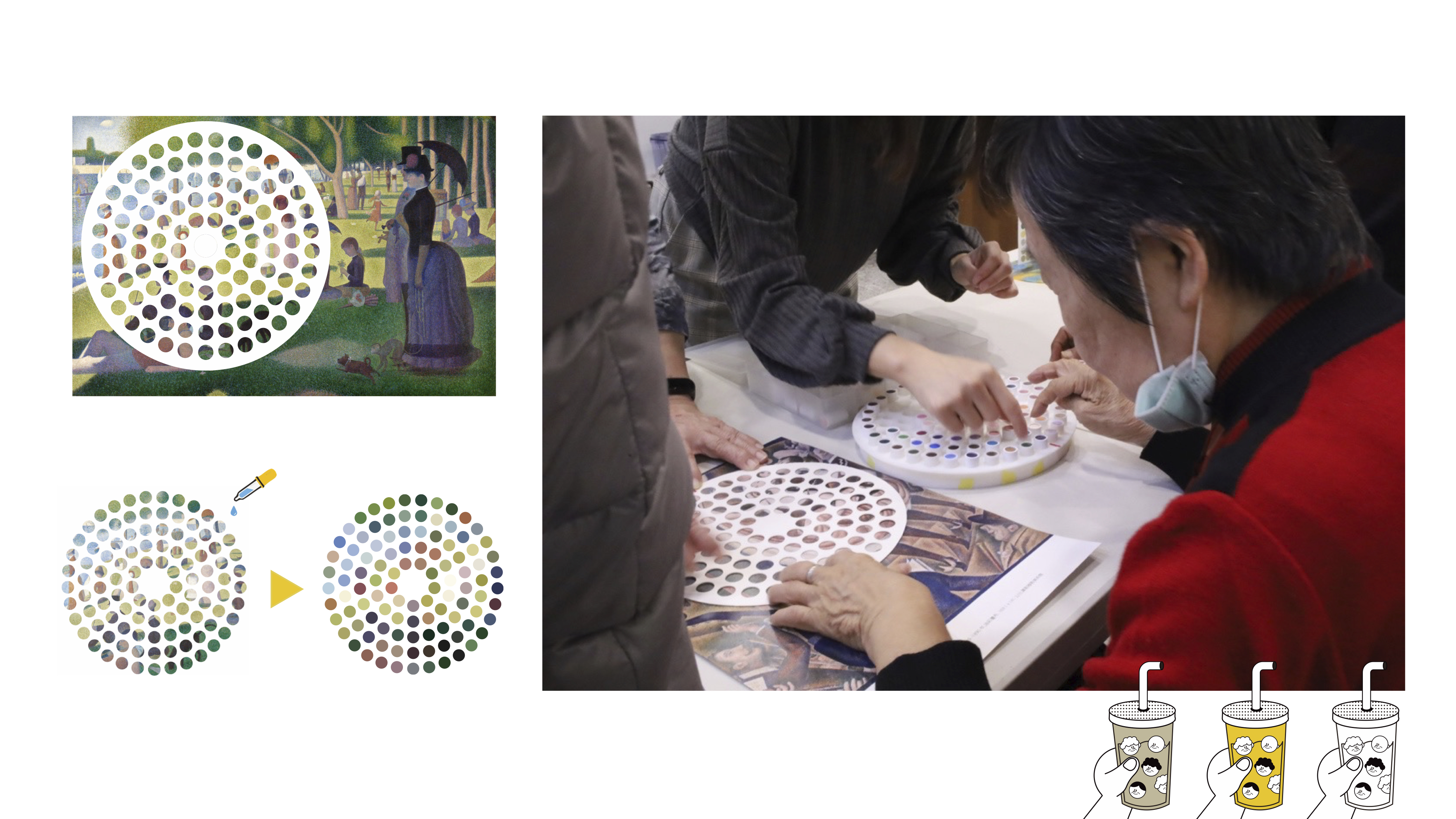 |
| Turn paintings into color blocks to create phonograph records. |
“I have never used colored dots to create art!” said Grandma Huang. The participants must think about where the dark colors go and about color correspondence. Brainstorming was required for the participants to arrange the colors. They had not once thought about using dots to create art. The sessions are full of surprises and anticipation.
The color–music synesthesia device placed on the table is a highlight of the course. The unique idea of “creating music with color” originates from the turntable. Older adults are guided to experience and observe the color changes in paintings. They chose corresponding color blocks to create unique phonograph records.
As the record spins round and round, melodious music flows into the ears of the listeners and takes them on a journey across time. A connection is formed between the listener and the paintings and composes a unique movement.
The color–music synesthesia device stimulates the audio and visual senses of older adults. Manual arrangements of color blocks help to train their hand-eye coordination. We hope that this course can be introduced into the community for more older adults to participate and elevate their bodies, minds, and souls as well as the overall well-being of society.
Improve health and mental state, and bring people closer together
Population aging is inevitable in the modern world. Older adults require not only comprehensive medical care systems but also the support from their families, communities, and environments. Actively and positively creating a friendly living environment for older adults is critical. Accordingly, National Taiwan University of Science and Technology created a series of creative courses entitled “i Design | Love learning: Cultivate an Interactive Multimedia Smart Living Environment for Co-learning between Younger and Older Adults.” The distance between older adults in the community and young students just entering the community can be reduced through music and colors. People across generations can learn from each other and cocreate value during this process.