
Engineers in Action travel to rural areas to assist with local infrastructure
Cultivating spontaneous, caring and communicative Green Engineers
I don't know if you've ever asked yourself this question, but how much do you think it will take to change the world around you? The answer might come as a surprise to you, but you only need a few people who have the same desire as you to change the world. As long as you are willing to take the first step and press forward, you will find that there are a lot of other people out there who will be willing to stand beside you and march towards the common goal of changing the world. And just like that, a difference can be made in the world. For there is a wise saying, “If you are virtuous, you will not be lonely. You will always have friends.". From this mindset of being virtuous and bold, ‘ Engineers in Action’ was born. Similarly to being moved by the courageous stories by the 'Doctor's without Border's’ project, several educators as well as students came together to nurture the newly born project. Spearheaded by our very own Dean of College Engineering, Professor Liu ZhiCheng, who had been inspired by the Engineers without Border's movement, the team of students and educators began their journey to make the world a better place. Today let's see the amazing progress of these ‘Engineers in Action’!
Taiwan Tech's Engineers in Action Development Program had been established long before it was eligible for and educational grant, however regardless of this, the program has successfully trained more than 100 participants so far. This USR (University Social Responsibility) Project is also advancing internationally as its goal and focus aligns with the United Nation's 11th Sustainable Development Goal (SDG) Indicator: "Promoting the inclusion, safety, resilience and sustainability of urban and human settlements". So far a team of educators and students have improved community infrastructure while nurturing a new generation of high-quality engineers achieving the goal of sustainable residence safety, school education and community development.
This year there were two key priorities at hand: Firstly, to continue the momentum of the preceding ‘Engineers in Action’ team; we contributed our resources to the rural areas of South East Asian countries such as Indonesia and Vietnam. In these far rural areas we improved the quality of the local drinking water, environmental sanitation, as well boosting teaching resources and environmental education just to mention a few. Secondly, we placed our focus on disaster prevention in local indigenous communities as well as preservation and development of these communities. Some of our efforts include: construction of early warning equipment for slope prone disasters, boosting environmental and disaster prevention education, restoration and preservation of community landmarks (watchtowers and traditional roads) and construction for ecological pond and fish-vegetable symbiosis systems. Taiwan Tech has always been known as the nation's leading University in the field of Engineering and for being progressive in moving in the direction of internationalization, and so through the Engineers in Action development program, it's hope is to train students to become engineers who are quick to listen, open to honest dialogue, dynamic in problem solving, all while still maintaining an international perspective.
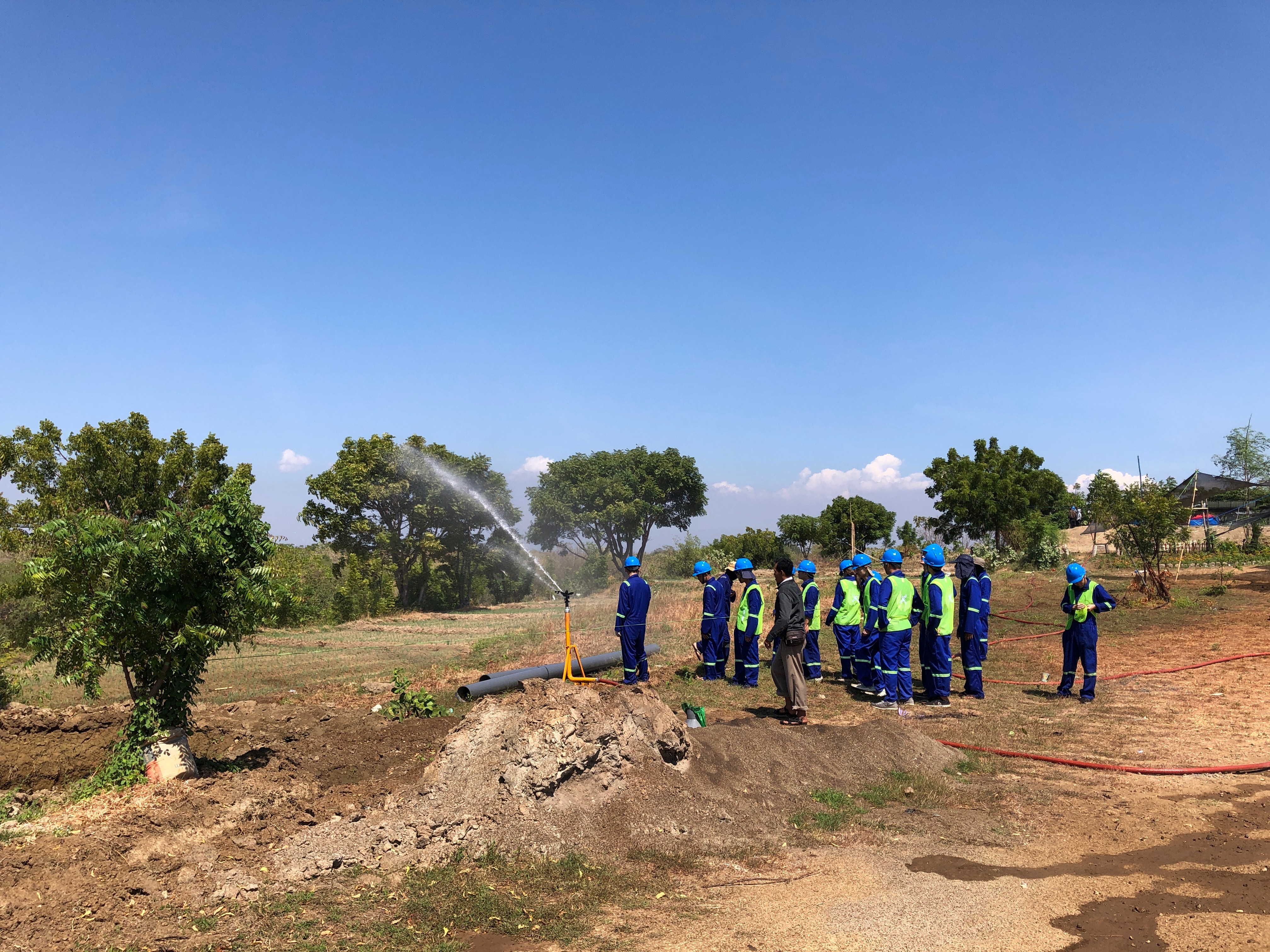 |
| Photo showing educators along with students constructing irrigation systems in the rural communities of Indonesia. |
Making the needs of the locals their needs, discovering and solving problems together, and deepening the relationships with friends
During this amazing experience students were able to embrace different cultures, familiarize themselves with the cultural lives of different groups of people as well understand the people and country of Taiwan better. They were able to adapt a world's view to their work. Most importantly, they were able to apply the theory they had learned in the classroom in a practical way, adding the special aspect of communicating with colleagues internationally. Hopefully students were able to see that there are aspects of their education that cannot be taught in the classroom. In the end, the hope was to give the communities a new look, with help from what the students had learned in the classroom.
A welcoming ceremony was co-organized with the residents of the communities. The goal of the ceremony was a mutualistic event for both the residents and students. For the residents, the ceremony allowed them to become familiar with the engineering students. For the students, it was more than just formality. For the students, the ceremony was so that they could have created a sense of identity with the residents. Yes, the students were there to work with the residents of the community but that was not the mindset that was desired to be instilled in them; that they were only there to do a job for the locals. The students were to not only work with the residents but also get to know them on a more personal level. Understand the needs and wants of the community. See the community not just as another community to work on but as their community to work for. In this way students would be better at solving the local environmental problems.
After many conversations with the locals and non-stop communications with the community, the students were able to identify and analyze the problems and now see themselves not as ‘employees’ but as friends helping other friends. The project became personal. Through many discussions and planning the students were able to work with the locals to find suitable solutions to the needs of the community. Alongside the engineering training skills they had learned, the students were able to take away an invaluable experience that they had with the locals. The locals were always warm in their welcome whenever the team arrived at the different communities. The children always rushed to greet the team, calling the them ‘older brothers and sisters'. The most difficult part was the departure. Both the team and the locals were always sad and hoped that they would be able to have more opportunities in the future to work with each other.
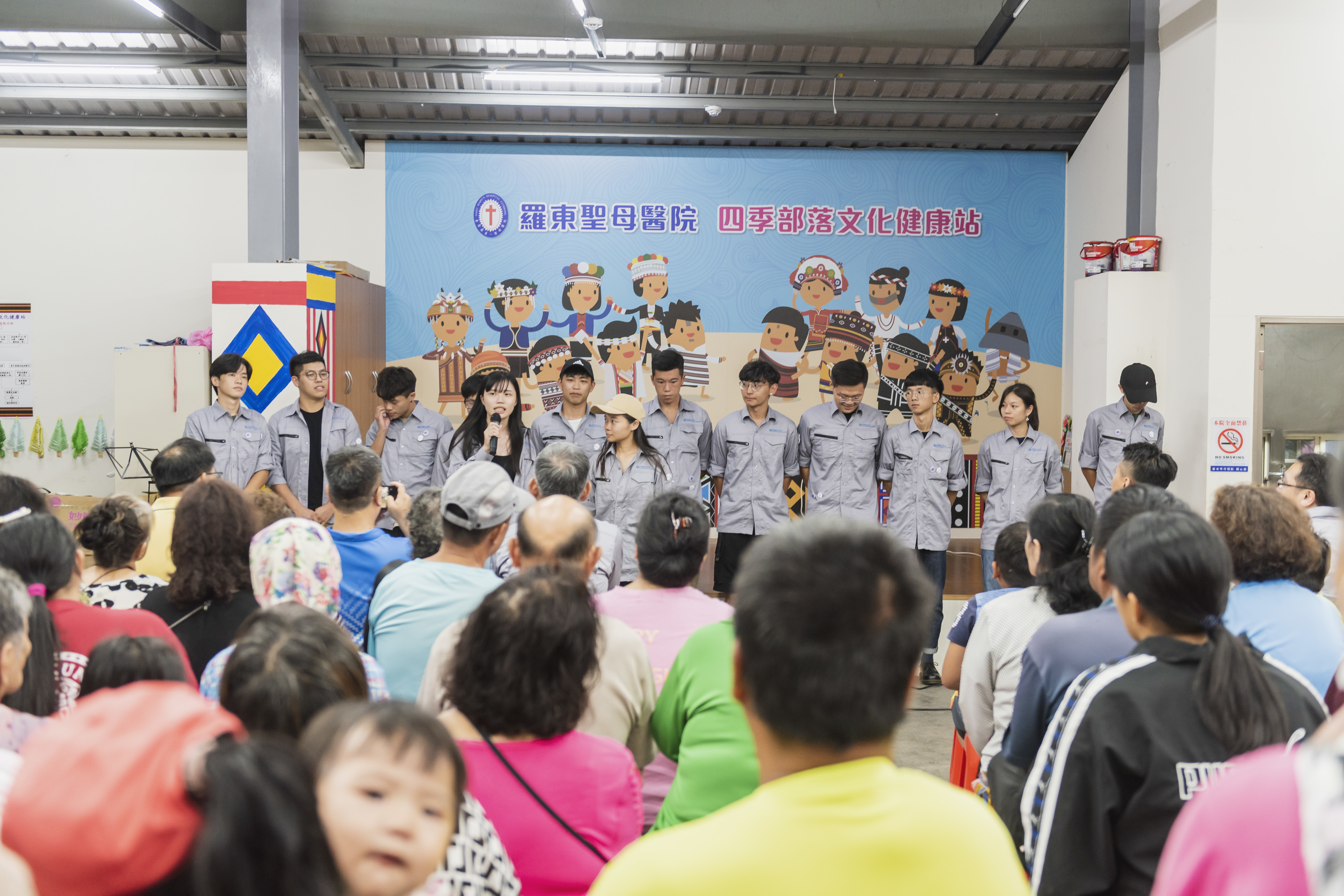 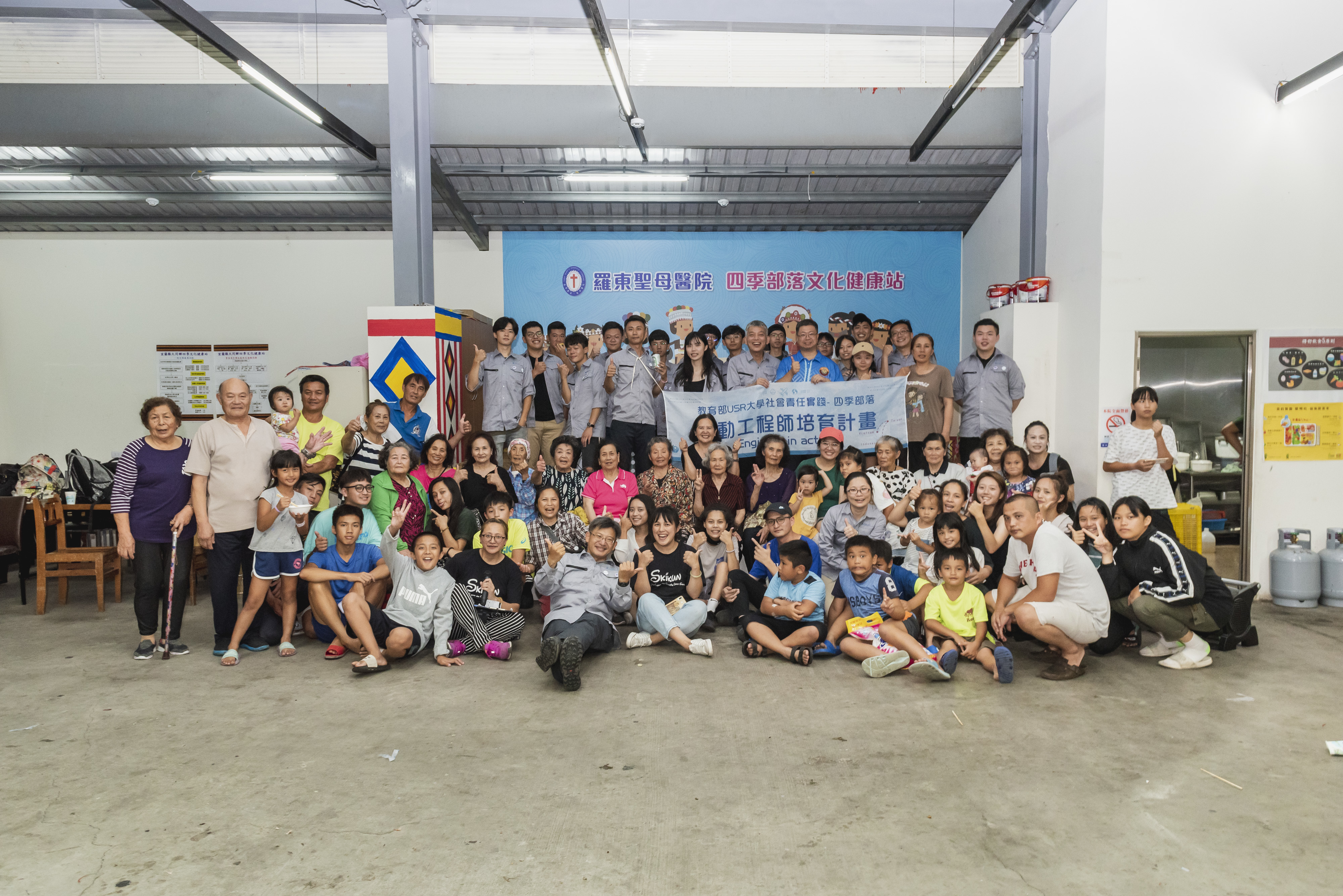 |
| The Four Seasons Tribal Residents at the welcoming ceremony for the Engineers in Action 2020/07/09 |
Automated slope monitoring equipment to enhance local environmental safety and resident's self-awareness of disaster management and prevention
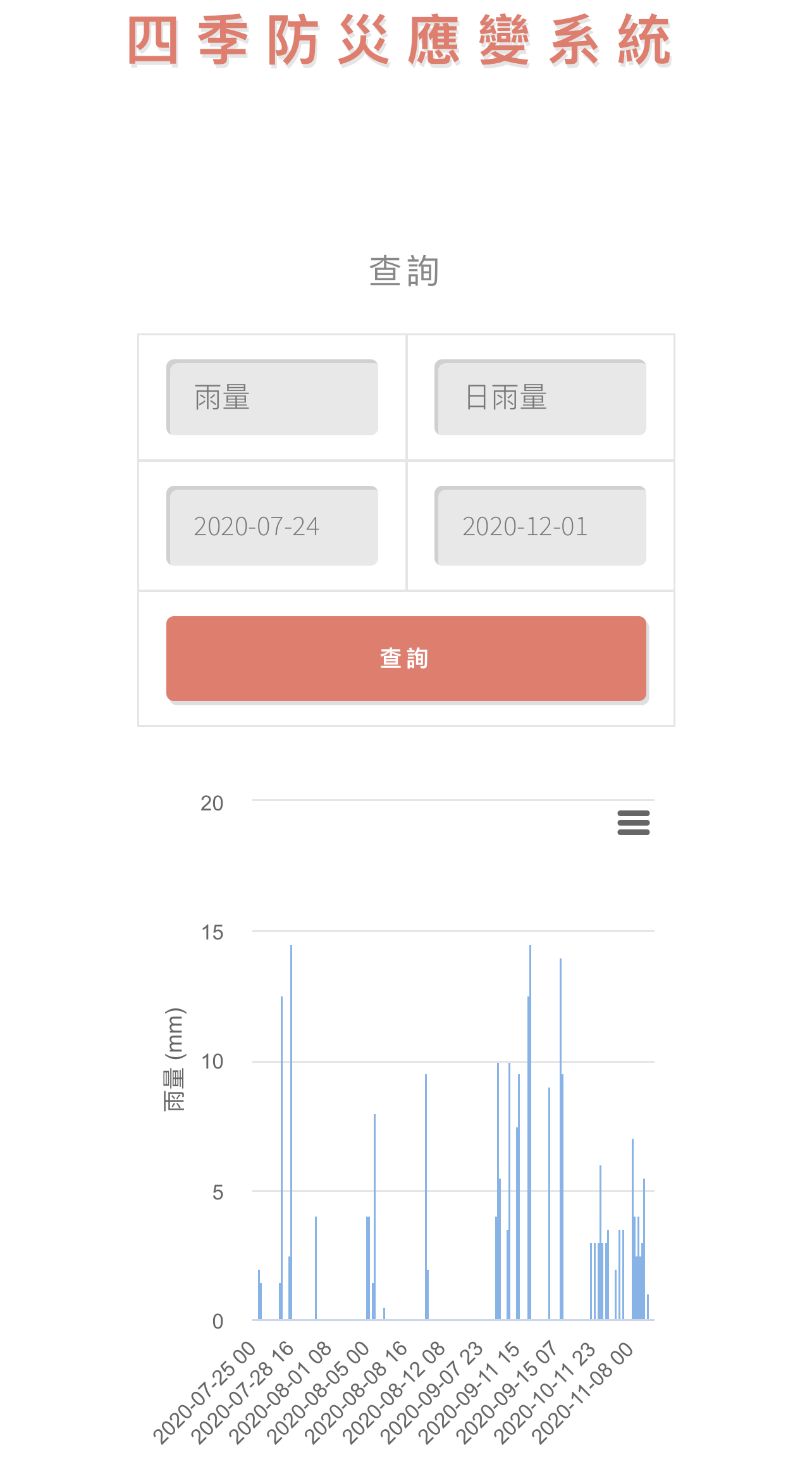
After discussions with the principal of the Yilan Four Seasons Primary School and local elders, the Engineers in Action's team found that the locals were concerned about the sudden changes in the landscape of the mountains which may indicate imminent disaster. Some of these changes included soil erosion , surface cracks and a rise in the water table. The Four Seasons community is located along The Four Seasons Forest Road which leads to a lake called Lake Garo which is popular among tourists. Throughout the year, as tourists visits the lake the locals hopes to give them opportunities to learn about their culture and customs by setting up local markets. This makes environmental safety ever more important. As a result the Engineers in Action team set their hopes to set up an equipment for automatic slope monitoring which will monitor rain water levels, changes in the water table as well as any changes in the landscape surface. The equipment will upload all this data to a digital cloud platform for disaster prevention analysis. This system can be used to enhance the local's disaster awareness and prevention. It can also be used for educational purposes. This system and data from the system can be used in the local school's curriculum as to implement a sense of sustainable disaster prevention. At the same time, locals and students are constantly maintaining awareness of the threat that the landscapes poses while improving detection mechanisms.
 |
 |
| Four Seasons Disaster Prevention and Response System APP | The Engineers in Action team installing automated slope monitoring equipment |
Hosting interactive disaster prevention activities on the primary school level and teaching courses on disaster awareness and prevention while promoting a rich learning environment
In order to enhance the local's ability to be prepared for disaster, the Engineer's in Action team had two core goals at its axis: ‘Disaster Prevention Education’ and ‘Campus Sustainability'. The disaster prevention camp was designed to educate primary school students on how to pool resources and communicate with each other in the event of a disaster. The students were taught to respect the camp as every activity was very important. One of the activities called for the students to make simple handmade rain gauge tubes. Through this activity the students gained a DIY (Do It Yourself) experience with measurement equipment. Using these equipment, students are able to measure the amount of rainfall at home as well as the acid-alkali quality of the rainwater as to better understand acid rain and the atmospheric environment.
In addition to these activities, a series of disaster prevention lectures were held to convey disaster prevention-related knowledge to residents through interactive courses. Disaster prevention task groups were organized to conduct disaster prevention drills, frequent inspections, pre-disaster evacuation drills, disaster response and post-disaster recovery drills. This will greatly enhance the level of disaster preparation and effectively help the local residents in disaster prevention.
Reaching the water demands of the local residents and adding value to sustainable health
Natural springs and rivers are the main sources of The Four Seasons’ water supply as well as purified river water of which the locals refer to as 'tap water'. After the water purification systems were constructed, the residents gradually became dependent on it but problems soon arose after the demand for purified water was greater than what the purification systems could supply. The locals suggested for new purification systems to be erected however there was insufficient land space and the strain that the purification system would have on the land was a high risk indicator for disaster. Therefore the Engineers in Action team used their international experience of building water resource systems and incorporated the local's investigative results to review the current situation and resolve the issue without having to build new purification plants.
 |
| Teaching the Four Seasons’ primary school students how to make simple water filtration systems |
Seizing the opportunity and making the best of it
Engineers in Action students participate in this program for at least six months within each academic year. Some of these students are young vibrant Freshman students who have been enthusiastic about working since high school. There are also students in their senior year who carry over this work into their Master's degree seeing what and how they can apply what they have learned in the past years to solve more modern day issues. Moreover, there are Alumni who spare no effort in returning every year after they have graduated. They come not only to share their past experiences abut also to engage in healthy dialogue with prospective participants. Engineers in Action participants demonstrate the dual ability of being able to apply what they have learned in the university classroom and showing that they are capable of understanding and really caring for people to help solve their problems. Regardless of the difference in their age or year of study, the students who participate in this program have been given an opportunity where they have received invaluable experience and built unforgettable bridges with each other. Not only is this program a hands-on project, it is also an incubator for breeding engineers with the spirit of listening and honest dialogue whether out in the field or among their colleagues. This program not only makes tangible changes in the field but also prompts a difference in the minds and hearts of the students who participates each year. This year was a bit rough as we are all dealing with the raging pandemic, nevertheless the participants maintained their relationships; ensuring that the locals of the participating countries and regions at home and abroad are taken care of and are safe.
Perhaps you, like this group of progressive engineering students, had the idea of doing something like this for the society but were sidetracked; by work, clubs or even love. If when night comes, you lay there feeling surges of regret pulsing through your body then maybe it’s time to step forward and be brave! This time, it may be rough, and it may be emotional, but what is certain is that to prevent these surges of regret, you must open your hand and firmly seize the moment and make the best of it!