
Urban-Rural Collaboration : Mobility for Changes
About Urban-Rural Collaboration
In addition to the economic structure in national level, the four disadvantages in the rural area also contribute to the widening gap between urban and rural development. They are disadvantages in 1. Novel knowledge intake, 2. Information acquisition, 3. Cross-disciplinary professional supports and, 4. Connection to the movement of social trend. On the other hand, the integration between the life of rural communities and the nature are very strong. From the sustainability point of view, life in rural area is more advanced than that in the city. By building the networks for the bi-directional exchanges of resources and information, I-Villages Plus project team, consisting of members from many places of Taiwan and in the world, seeks to reshape the relation of the two sides for the better. The project team learns from the rural community for the ideas of a more sustainable way of living. Meanwhile, the rural communities benefit from the NTUST’s participation to mitigate the four disadvantages in its development.
The two pillars of the project are the science-and-technology-based operation and the rural-urban collaboration. The collaboration is carried out in four iterative steps: 1. Identifying the new opportunities 2. Forming the goal-based team 3. Initiating the value-added chain actions 4. Establishing the sustainable operational model. Working with local government, industry and education institutions, the NTUST continues to cultivate talents for local needs. The project team are deeply involved in local affairs of the Guanshan Township and its surrounding settlements with three key areas of engagement: digital learning, sustainable built environment and ICT technology. We use “mobility for changes” as the catch phrase to organize of the city-bound events which increase the visibility of rural community in urban areas and the resource flow between the two. We propagate the well-established operations of Rural-urban collaborations in Gaunshan to the rural partners in other regions to improve the status of more underprivileged communities. We also introduce outside partners to the network, such as charity and education foundations, NGOs and CSRs. With the inputs of the external members, the urban-rural coalition is constantly recharged and becomes ever more sustainable in making the real changes.
The three types of operations above are listed as Paradigm Deep Rooting, New Paradigm and Paradigm Expansion. Through Paradigm Deep Rooting, local partners from government, industry and educational institutions are acquainted with how to utilize of the NTUST’s partnership to improve the rural governance and to fight against the four disadvantages. For NTUST , the rural sites offer the “blue sea” to improve its professional capability in cross-disciplinary coordination as well as advance its knowledge in the science subjects regarding sustainability. Through New Paradigm, NTUST, rural community partners and the external third party partners are able to break the geographical barrier to form a high mobility team capable of complex operations. Through Paradigm Expansion, the I-Villages Plus USR project recruits external partners. It enables the project to broaden its influence to other underprivileged grounds.
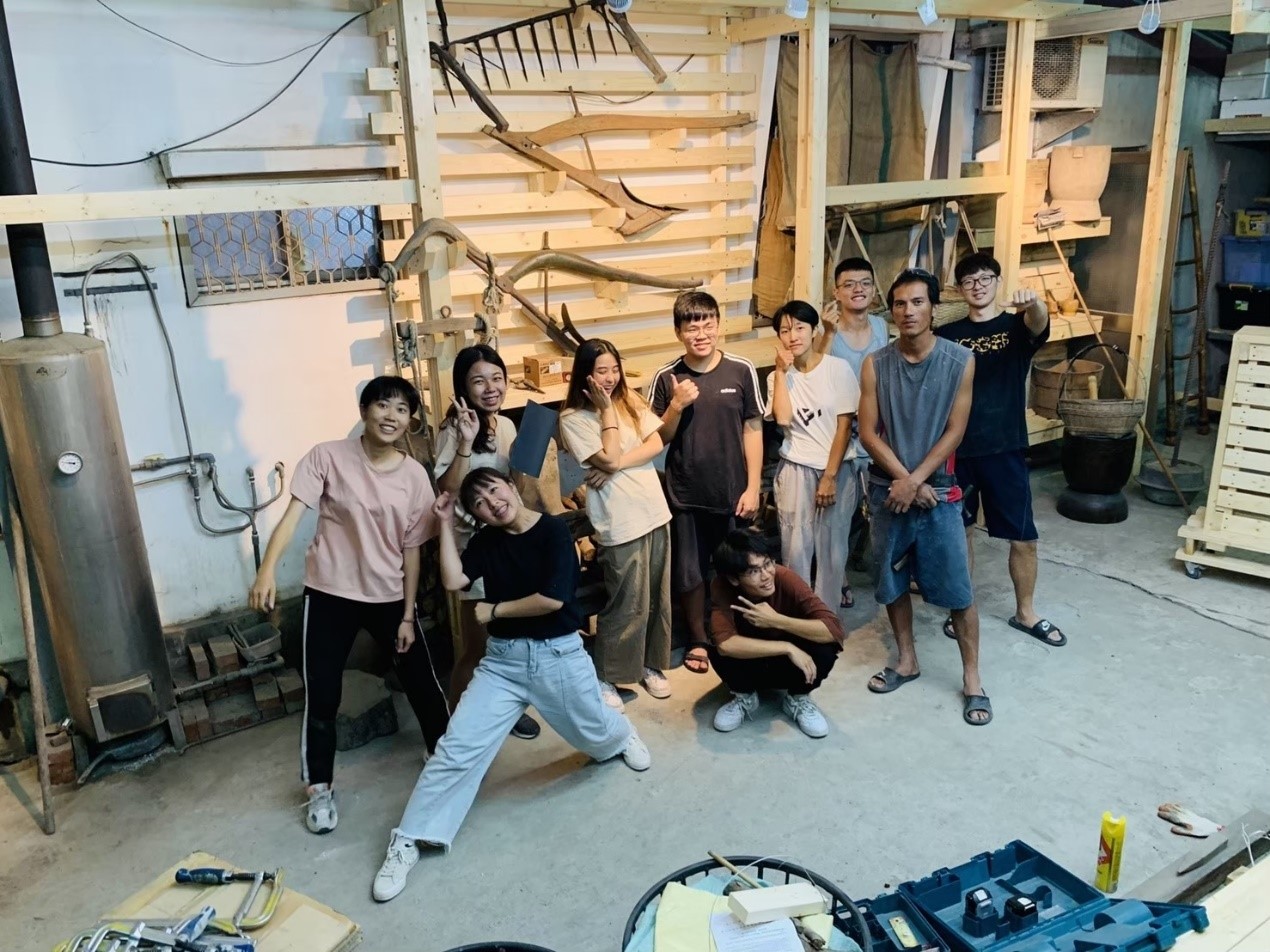 |
| Summer construction project : learning space for after-school kids in Parupu of Amis |
Making the New Paradigm: the Two-way Mobility
Economic theory has explained that the individual’s mobility is a powerful tool to break the barrier of location-based restrictions and to pursue new economic opportunities. The hollowing effect of the rural communities due to the mass migration to metropolitan areas for better economic opportunities during Taiwan’s industrialization period shows how mobility influences regional development.
Through the re-shaping of “mobility”, we seek to construct the bi-directional flow between urban and rural environment. Not only transferring the resources from the cities to the rural areas, but also projecting the presence of rural settlements to the cities. “Sizu- My love of Alpinia “exhibition took place in the Studio 94 last summer was the manifesto of this vision.
Two years ago, our project team first met teacher Buni of Bunun tribe. Very soon, we found that there is a great potential from Buni’s knowledge and craftsmanship with Alpinia from both educational and local-economy prospects. More to that, Buni has already lead a team for this endeavor with an alpinia conservatory in Kanahcian near Guanshan. Unfortunately, with a good weather pattern for alpinia conservation, Kanahcian is not easily accessible to the public. The project team consulted with the Thermos Foundation, an expert in the field of promoting cross-cultural understanding, about Buni’s case. And the coalition of the three sides is formed. Starting from the coming winter break, scores of students were sent to Guanshan and Kanahcian to receive training from Buni about alpinia and Bunun’s way of living. The agent from the foundation was embedded in the team. Very shortly, the Thermos Foundation proposed to host a major exhibition in Studio 94 centered on Bunun’s alpinia culture. In concert, the three sides arranged their respective tasks under this common goal. Buni’s team focused on arranging the transportation and logistics of alpinia plants and art pieces and designing the “Bunun” exhibition space inside Studio 94. The Thermos Foundation was in charge of the prints, photo imaging, advertising, guess invitation and group tours. NTUST student continue to work in the alpinia conservatory in Kanahcian and later move back to Taipei Studio 94 as the key manpower in setting up the exhibition. The fusion of three sides created a new paradigm in USR cross-institutional collaborations. It provides an up-scale stage in the urban scene for the talented local partners without detaching them from the homeland and the cultural root.
More than a thousand individuals and groups came to Studio 94 in the two months of “Sizu - My love of Alpinia” exhibition. The exhibition was well received by general public, corporates and education institutions alike. In one occasion, the students of the blind school were introduced to Bunun’s alpinia culture by touching, listening and smelling. Such experience could never have taken place but for the excise of the “New Mobility”. Inspired by the success, Buni and her team established an NGO dedicating to the conservation of Bunun’s cultural environment in the Hwa-Dong Valley. A condensed version of “Sizu -My love of Alpinia” exhibition continued to run in the “Simple Life” art gallery in Dadaocheng district after the conclusion of the event in Studio 94. It has attracted many commercial interests. And the NTUST’s project team has since further taken root and continued to send in new generations of students to learn and to participate in the revitalization of traditional arts and crafts and improve the built environment in the Guanshan region.
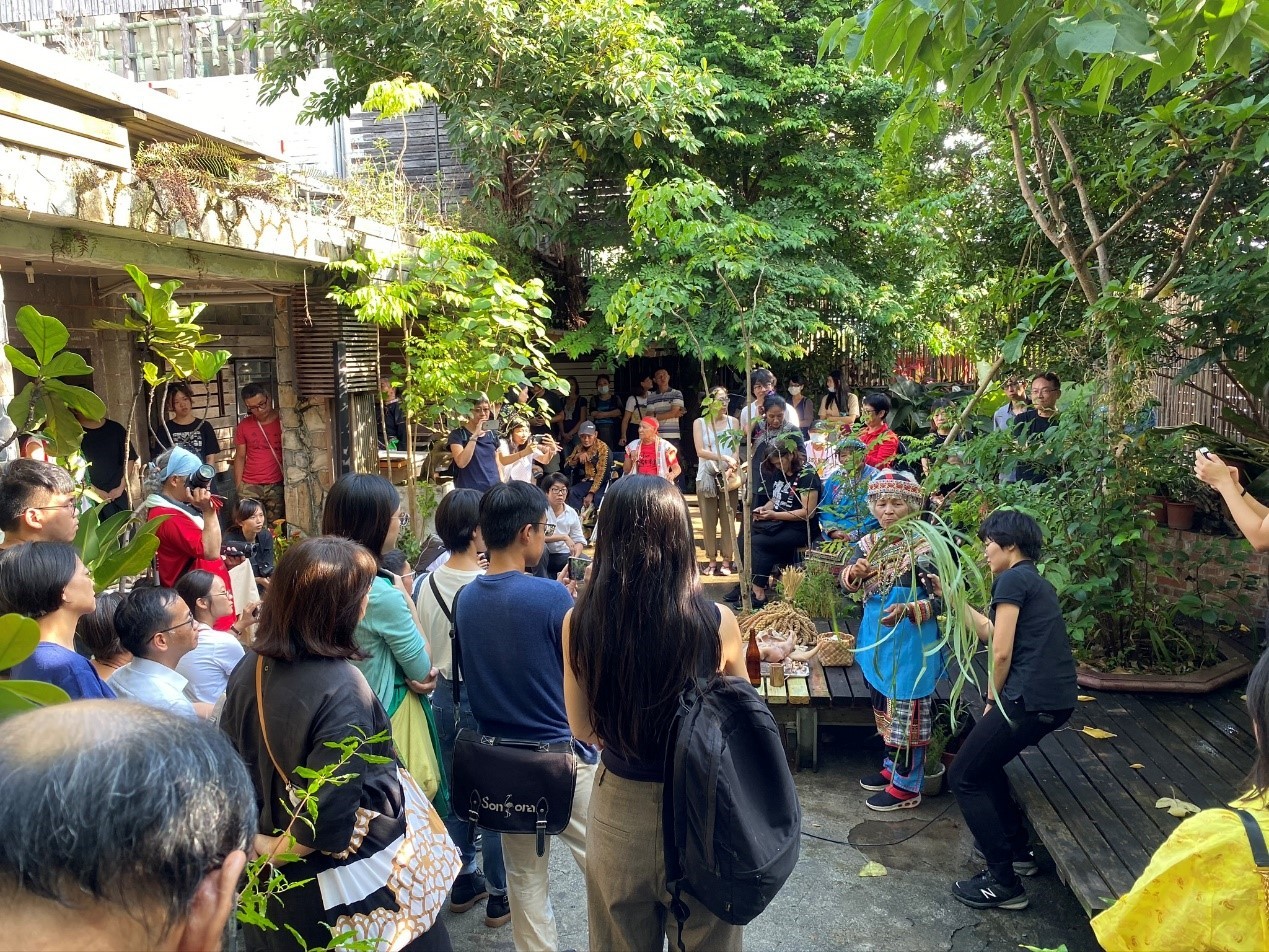 |
| “Sizu: My love of Alpinia” exhibition opening ceremony with Bunun Shamen Hu, Jin-Niang |
Altruistic Education through Distance Learning Companion
【The secret to happiness in life is helping others. Bringing happiness for others makes your life much happier and more meaningful.】
According to Professor Cathy Weng, there have been insufficient educational resources for children in remote areas for many years. Therefore, in order to build a friendly bridge between urban and rural areas, promote multicultural education, and international exchange activities, Professor has designed a social responsibility project named Digital Learning Companion based on the needs of different schools in disadvantaged areas. Currently, a total of eight elementary and junior high schools in Taiwan are participating in this project, including Pingtung Liangshan Junior High School, Hualien Wenlan Junior High School, Taitung Guanshan Junior High School, Alui Junior High School, Yunlin County Ma Guang Elementary School, Ma Guang Junior High School, Keelung City Zhongzheng Elementary School, and Xiantong Elementary School.
This project provides one-on-one videoconferencing sessions related to English, mathematics, science and technology classes for children in these rural areas to communicate with their tutors and allows tutors to accompany and assist them in doing homework. In addition, international students as tutors can expose to multicultural education and cultural exchanges, introduce rich digital teaching resources, and accompany the learning and growth of local children. To open the eyes of rural children to see more possibilities, opportunities were given to the students to learn how to reflect and get feedback, as well as to illustrate the altruistic spirit and social responsibility practice; Meet up, an event will be held during the end of the semester to promote the emotional relationship between the school students and the university students.
Learning is a beautiful thing, and every child is unique who has the potential and strength to learn, grow and develop. We have received positive reflection and feedback from university and remote school partners during our school visits to the remote areas for the winter and summer “Meet up” activities. Some children expressed their attitudes towards the project, saying “Thank you for teaching and accompanying us, we also hope to be able to learn or have the resources to share to more people in need”; therefore, it is hoped that allowing children to discover their own advantages will help in triggering their own learning motivation, apply their knowledge to life, and share it with more people in need. The university students also appreciated the opportunity to practice social responsibility and shared their feelings about this project “Giving the best to people in need, accompanying life with life” are the core values of teaching through the spirit of altruism and contribution to the community development.
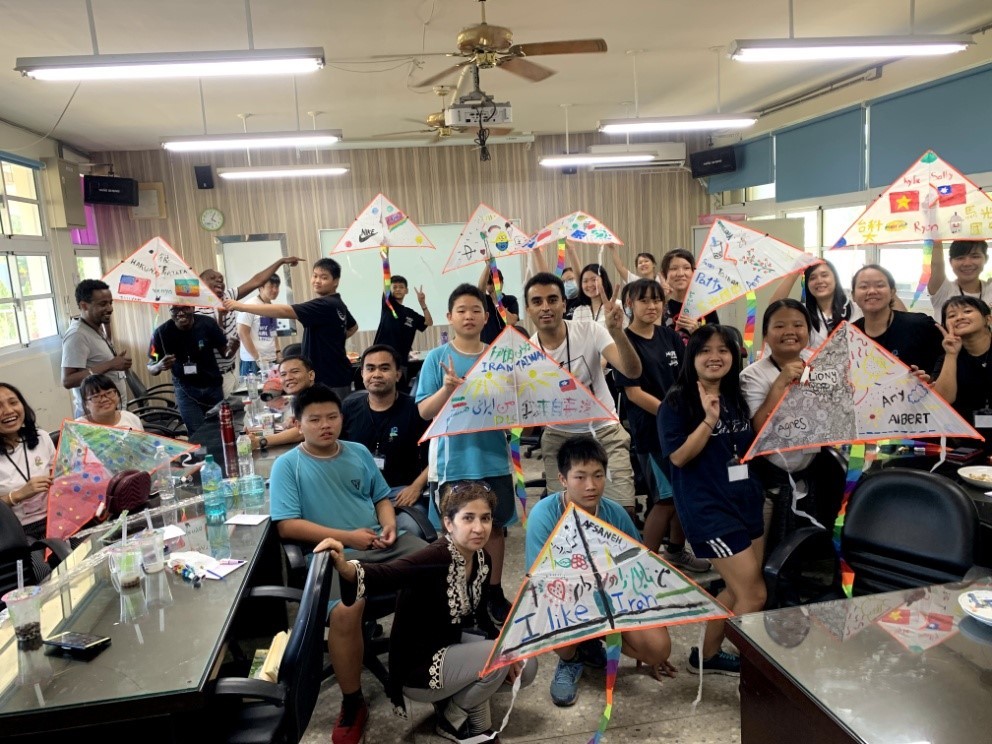 |
| The Meetup of Digital Learning Companions and Students from Ma Guang Junior High School |